Trump, Xi and Putin hold the first trilateral summit in history in Shenzhen
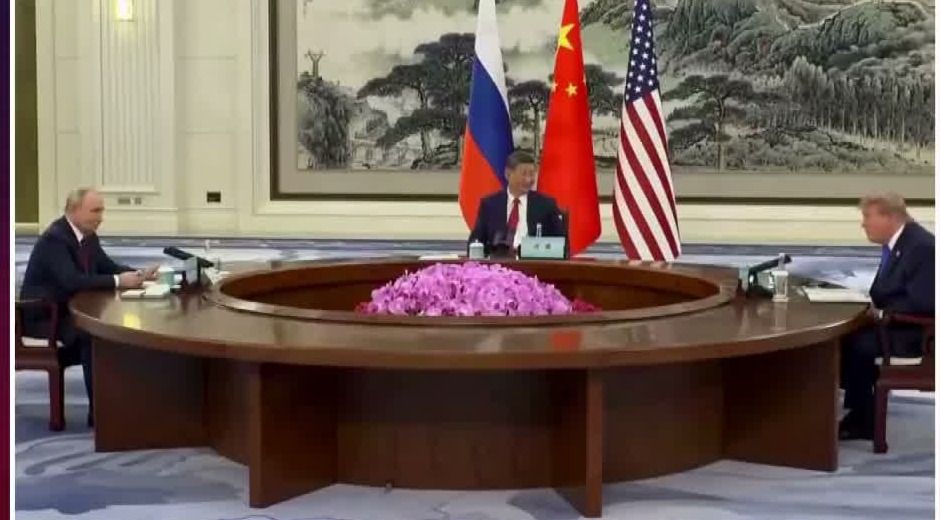
Updated 6:35 a.m.: After the meeting, the three governments published a four-point joint declaration: reforming the UN, increasing the supply of refined oil, limiting the reach of the International Criminal Court and opening a dialogue on reducing nuclear risks and preventing proliferation. There was no deal on Ukraine, Iran or a new nuclear arms treaty. Trump and Xi did agree to extend the trade truce between the United States and China, without disclosing for how long or on what terms, according to the Globe and Mail, CNBC and Bloomberg. Trump left Shenzhen for Washington without speaking to reporters.
The presidents of the United States, China and Russia sat down at the same table for the first time on Thursday in Shenzhen, China, in the first trilateral summit in history between the three powers. Donald Trump, Xi Jinping and Vladimir Putin spoke for about an hour, on the sidelines of the APEC summit, about nuclear weapons, the war in Ukraine, the war with Iran, trade and artificial intelligence, according to USA Today.
Before the joint session, Trump met separately with Xi and with Putin. As he entered the bilateral meeting with the Russian leader, Trump greeted him before the cameras with: "Who is he? He's my friend!"
In his opening remarks, Xi said that "positive interaction among major powers is not a matter of choice, but a mandatory requirement." Trump warned that "we're not going to let Iran have a nuclear weapon," and Putin said the three countries share an interest in resolving the war in Ukraine.
The meeting produced no breakthrough on Ukraine, Iran or a new nuclear arms treaty, something analysts had already anticipated. The joint declaration, published by China's state news agency Xinhua, is the first statement ever signed by the three leaders. Trump and Xi are expected to meet again in December, at the G20 summit in Doral, Florida, according to AP.
The gathering drew comparisons with the 1945 Yalta Conference, when the United States, the United Kingdom and the Soviet Union defined the postwar order. Ukrainian President Volodymyr Zelenskyy warned in October: "We really don't want this to turn into 'Yalta 2, 3, 4,' with a redistribution of influence."
Follow-up to: Xi greets Trump with a hug in China and Trump shakes Putin's hand ahead of Thursday's historic summit
Photo: PTI
Source: USA Today